

Most of the people I see with neck and shoulder pain are due to repetitive motion, postural alignment; very few are from injuries. But what are other causes / contributing factors?
Stress and anxiety. These emotions can cause a person to tense up; the body releases more cortisol to help manage the stress, but when prolonged, muscles can stay in a contracted state forming trigger points. What is a trigger point — it’s a taught band in a muscle, which can cause pain, discomfort and limit range of motion, and there can be more than one in a muscle.
Why are trigger points common in the upper trapezius?
- Our posture at a computer over time tends to lead to elevated and rounded shoulders — so those traps are working overtime and we’re not even lifting anything. 2. the rounded posture mimics a fetal position, where we are trying to protect ourselves by closing off our most vulnerable areas: organs and head.
- Trigger points are visible with advanced imaging, and they can be felt, with some exceptions.
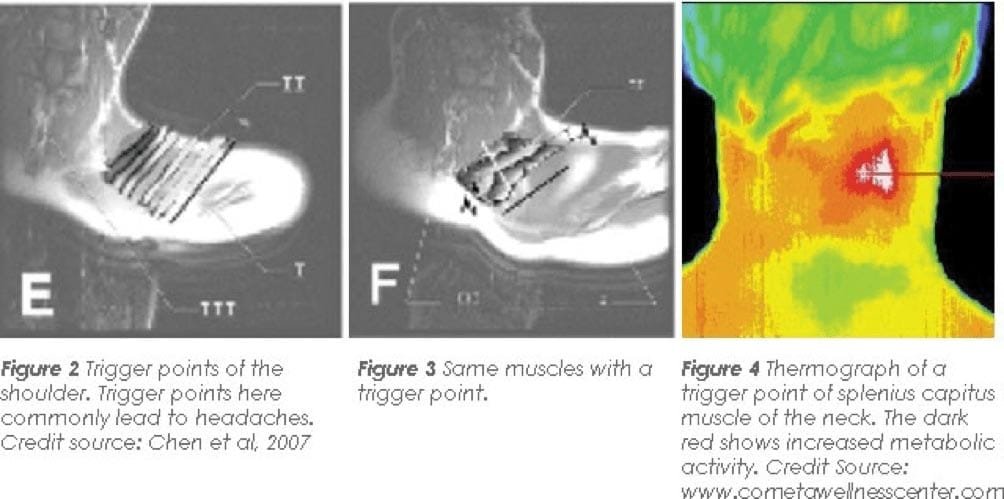
What can you do about them?
- Stay hydrated, a sure fire way to keep muscles in a contracted state is to be dehydrated.
- Keep moving. Schedule breaks in your day so you’re not hunched over your screen for hours on end. Stretch during your break, and give your eyes a rest. Stare at something in the distance to let your vision relax and refocus. This isn’t directly related to trigger points, but helps reduce overall stress and eye strain.
- And of course, if they persist, acupuncture and dry needling are excellent ways of releasing trigger points. You may be a little achey afterwards, but you will find improved movement and less tension after the soreness wears off.
- * Last but certainly not least, breath deeply from your abdomen. If you find you’re using your shoulder and accessory muscles of the neck to breath, you’re not fully engaging your diaphragm and intercostal muscles. Place once hand over your abdomen and feel your belly rise and fall so you know you’re taking in deep breaths and fully expanding your ribs and diaphragm.
Further reading: https://www.aafp.org/pubs/afp/issues/2002/0215/p653.html